Best NFL Coaches of the 1980s: Ranked by Winning Percentage
In this post, we rank the 10 best NFL coaches of the 1980s by winning percentage. The 1980s were a golden era in NFL history, defined by dynasties, innovation, and iconic coaches. From Gibbs and Walsh to Ditka, these sideline legends reshaped football through strategy and toughness.
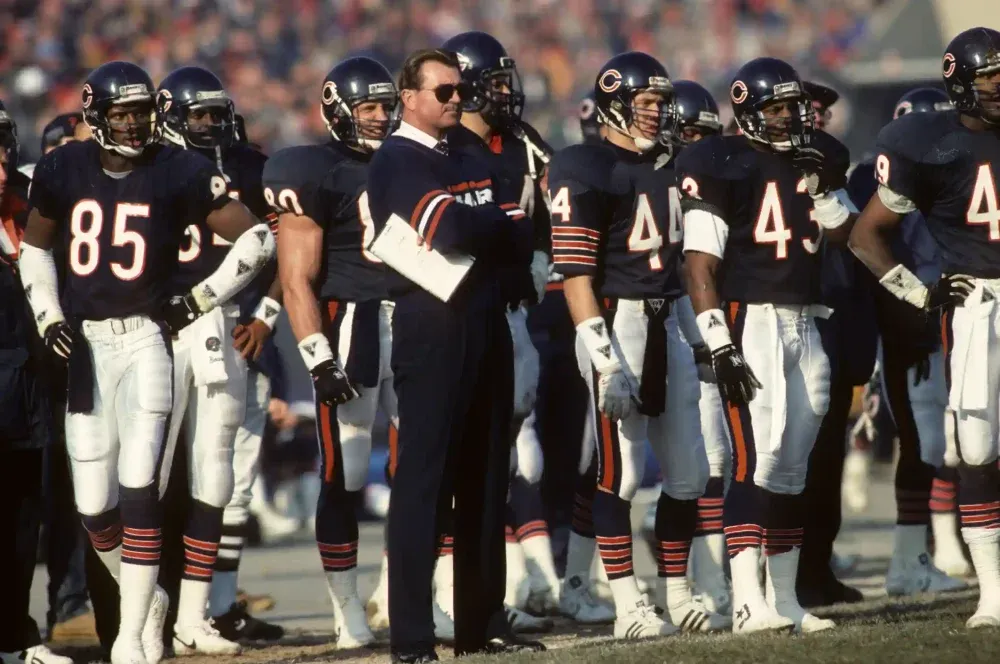
In this post, we rank the 10 best NFL coaches of the 1980s by winning percentage. The 1980s were a golden era in NFL history, defined by dynasties, innovation, and iconic coaches. From Gibbs and Walsh to Ditka, these sideline legends reshaped football through strategy and toughness.
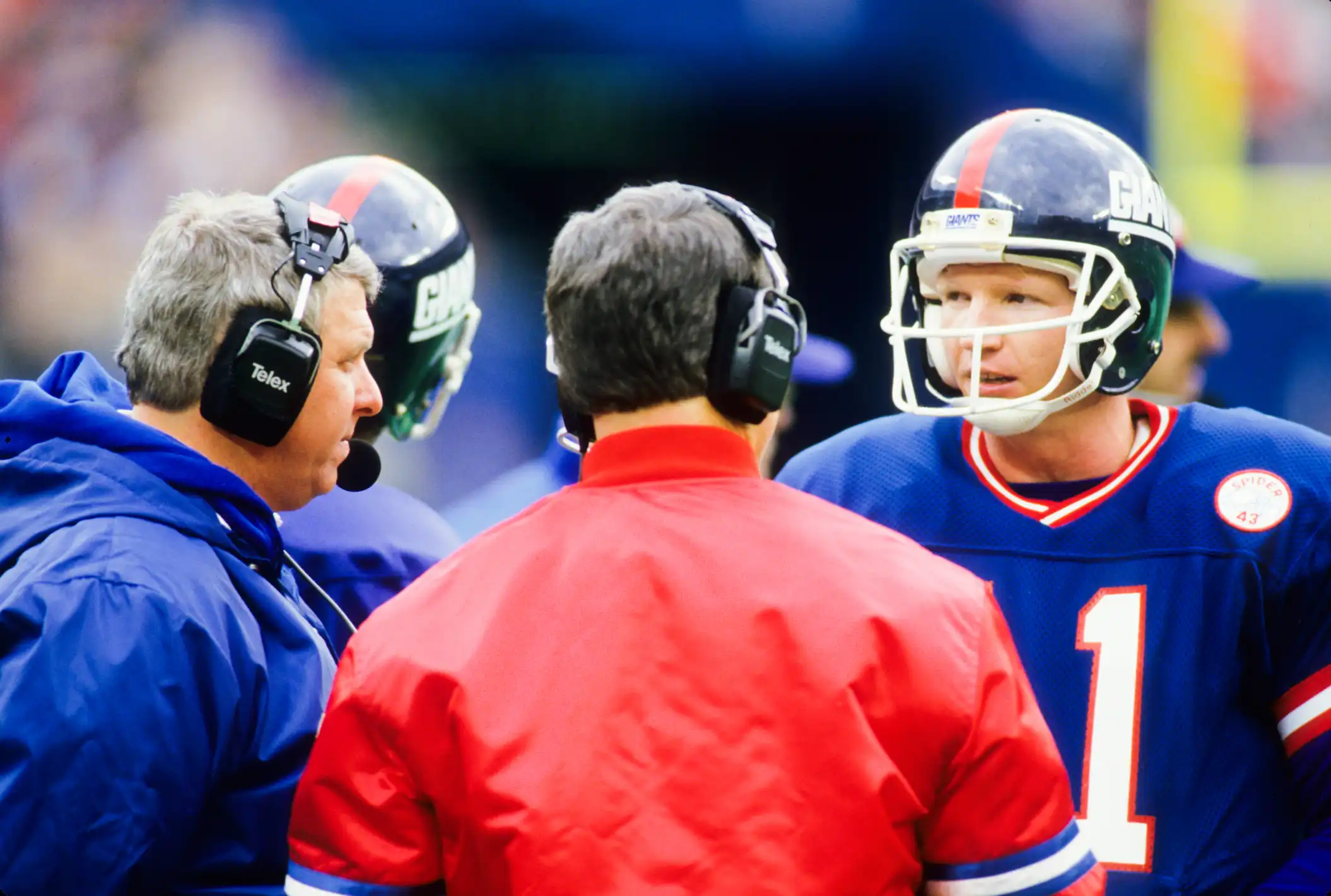
10. Bill Parcells: 64–46–1 (.581)
New York Giants (1983–1989)
ID 161296990 @ Gerald T. Coli | Dreamstime.com
Bill Parcells, known as “The Big Tuna,” transformed the New York Giants from underachievers into one of the NFL’s most feared teams by the late ’80s. When Parcells took over in 1983, the Giants were a team with promise but lacking identity. By decade’s end, they were Super Bowl champions.
Parcells built his reputation on discipline, defense, and detail. His no-nonsense style set the tone for a locker room that featured rising stars like Lawrence Taylor, Phil Simms, and Harry Carson. His coaching tree would later grow to define the modern NFL, spawning future legends such as Bill Belichick, Tom Coughlin, and Sean Payton.
The highlight came in 1986, when Parcells led the Giants to a 14–2 record and a dominant playoff run capped by a 39–20 victory in Super Bowl XXI over the Denver Broncos. His Giants were the embodiment of toughness — a reflection of their coach’s demanding nature. Parcells’ ability to manage egos and motivate stars laid the groundwork for his Hall of Fame career and set the standard for New York football toughness. Parcells was inducted into the Pro Football Hall of Fame in 2013.
Read More:
9. Chuck Knox: 89–63–0 (.586)
Buffalo Bills (1980–1982); Seattle Seahawks (1983–1989)
“Ground Chuck” Knox earned his nickname for a reason — his teams were built on physical running games, disciplined defense, and controlled passing. He coached two franchises during the ’80s and left both better than he found them.
Knox began the decade with the Buffalo Bills, immediately guiding them to back-to-back playoff appearances (1980–1981) and helping restore respect to a team that had struggled in the late ’70s. In 1983, he took over the Seattle Seahawks, a young franchise with no real identity. Under Knox, that quickly changed.
In 1983, Seattle reached the AFC Championship Game, the team’s first postseason success, led by running back Curt Warner and quarterback Dave Krieg. The Seahawks were tough, resilient, and well-prepared — hallmarks of Knox’s leadership. He compiled five winning seasons in seven years with Seattle and established them as consistent playoff contenders in a competitive AFC West.
Though he never reached a Super Bowl, Chuck Knox’s steady, blue-collar approach left a mark on both coasts. He was the epitome of consistency in a decade defined by flash.
8. Jerry Burns 38–25–0 (.603)
Minnesota Vikings (1986–1989)
Jerry Burns may have only coached four seasons in the 1980s, but his impact was significant. Longtime Vikings fans remember Burns as an offensive innovator — a fiery, passionate coach who brought new energy to a franchise searching for its next great era.
After serving as the Vikings’ offensive coordinator under Bud Grant, Burns took the helm in 1986. His teams were gritty, explosive, and highly competitive in a tough NFC Central. Under Burns, the Vikings reached the playoffs three times in four seasons, including a remarkable 1987 postseason run that took them all the way to the NFC Championship Game, where they fell just short to Washington.
Quarterback Wade Wilson, receiver Anthony Carter, and a stout defense featuring Chris Doleman and Joey Browner defined the Burns era. Though he never reached the Super Bowl, Burns’ teams were always dangerous — and his colorful press conferences made him a fan favorite.
Burns’ short tenure belied his lasting impact. He helped bridge the gap between Bud Grant’s disciplined old school and the modern offensive era, keeping Minnesota relevant and respected throughout the late ’80s.
Read More:
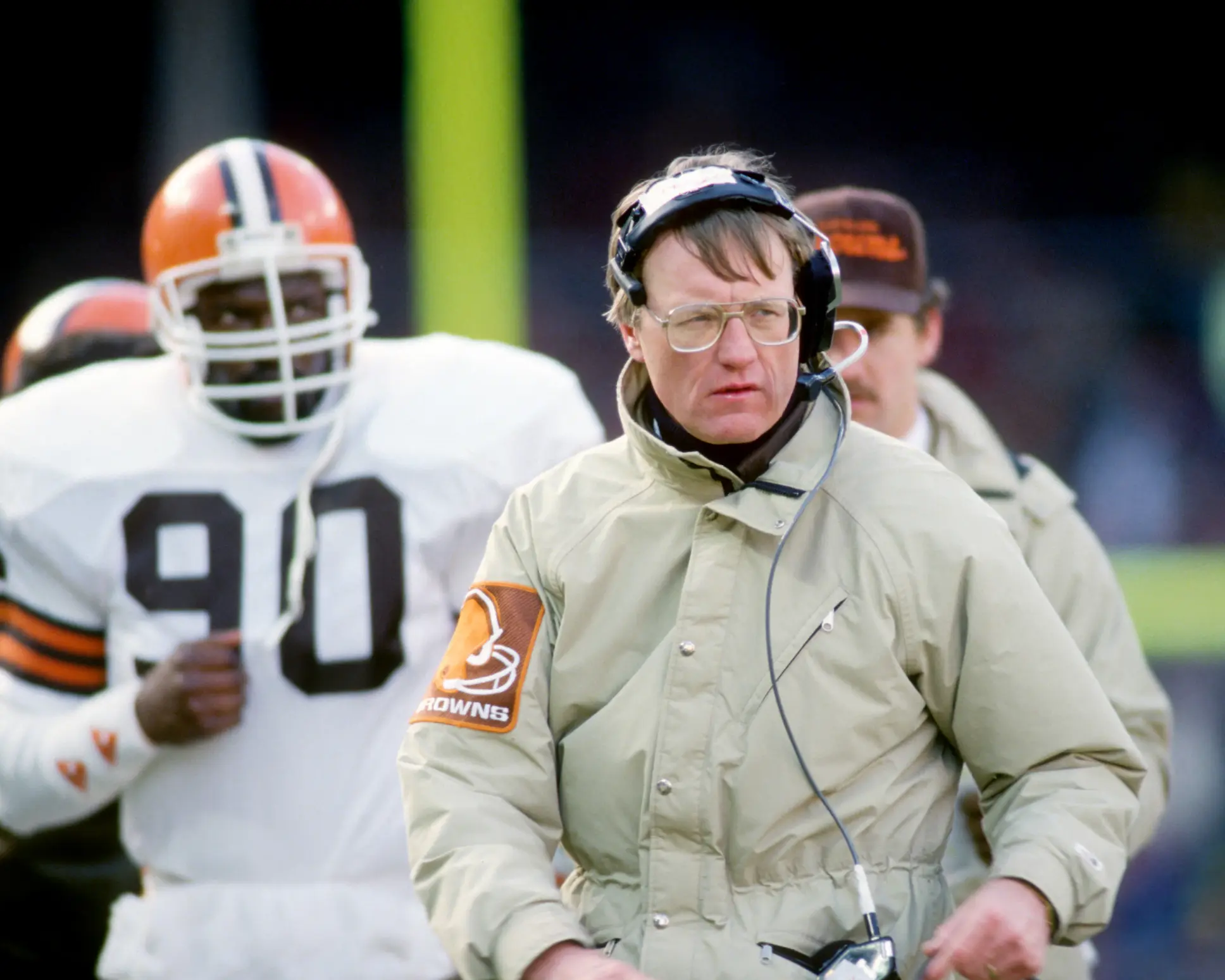
7. Marty Schottenheimer: 52–34–1 (.604)
Cleveland Browns (1984–1988); Kansas City Chiefs (1989)
ID 74095128 @ Gerald T. Coli | Dreamstime.com
Few coaches in NFL history were as respected — or as heartbreakingly close to greatness — as Marty Schottenheimer. His teams were tough, methodical, and always competitive. While he never reached the Super Bowl in the 1980s, Schottenheimer’s Browns were among the most consistent winners of the decade.
Taking over midway through 1984, Schottenheimer molded the Cleveland Browns into an AFC powerhouse. Led by quarterback Bernie Kosar, running back Earnest Byner, and a stout defense, the Browns reached the AFC Championship Game in both 1986 and 1987, only to fall to John Elway’s Denver Broncos in two of the most dramatic playoff games in NFL history — The Drive and The Fumble.
In 1989, Schottenheimer moved to the Kansas City Chiefs, where he began another long stretch of winning seasons. His coaching style — known as “Martyball” — emphasized defense, running, and mistake-free football. It wasn’t flashy, but it worked.
Though the ’80s didn’t bring him a ring, Schottenheimer’s consistency, leadership, and respect among peers made him one of the defining coaches of the decade.
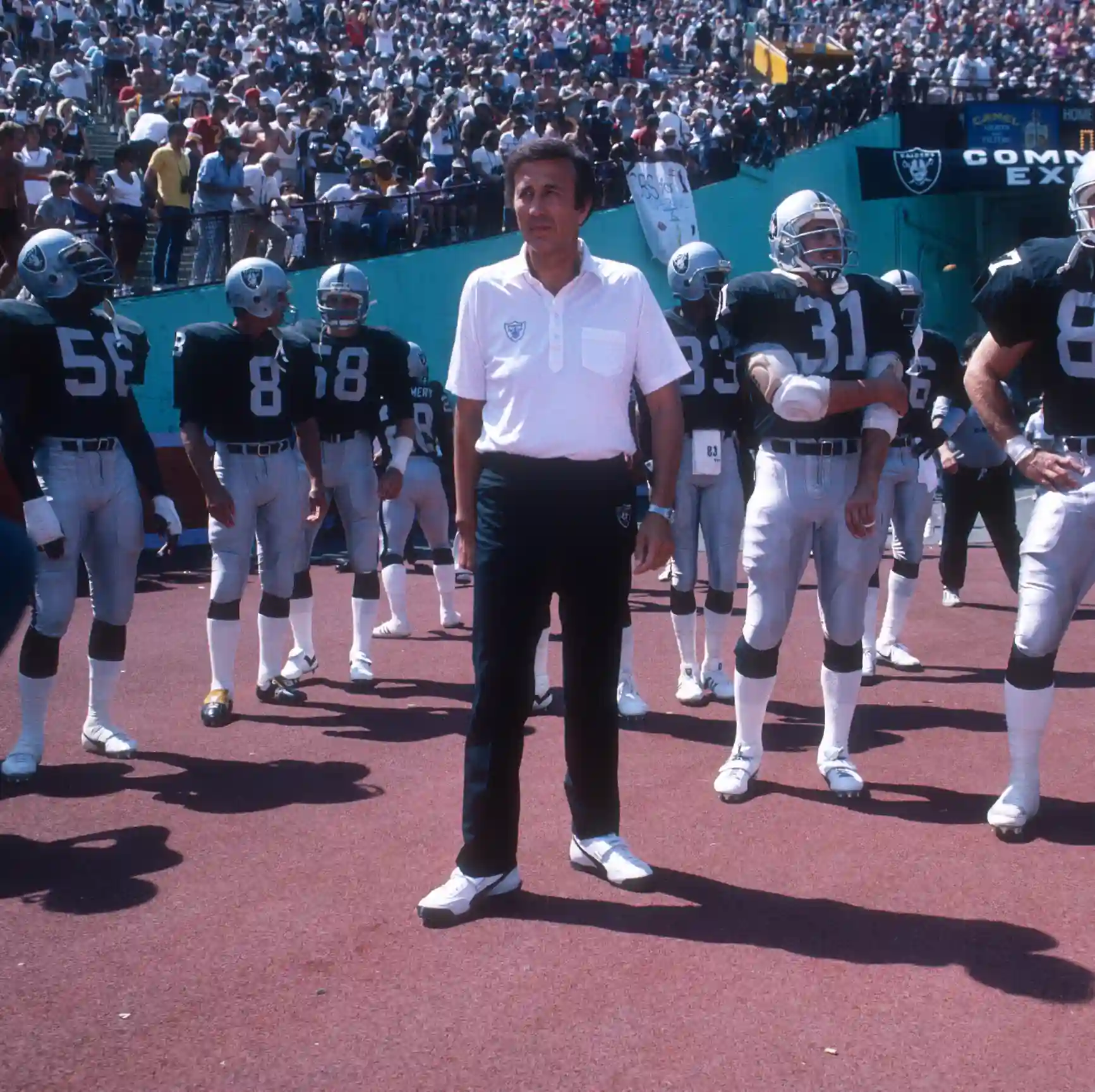
6. Tom Flores: 74–46–0 (.617)
Oakland Raiders (1980–1987)
ID 174622096 @ Gerald T. Coli | Dreamstime.com
Tom Flores quietly built one of the most successful coaching résumés in NFL history — and he did it with little fanfare. Often overshadowed by louder personalities, Flores let his results speak for themselves.
In 1980, Flores led the Oakland Raiders to an improbable Super Bowl XV victory as a wild-card team — the first in NFL history to win it all from that position. Quarterback Jim Plunkett, running back Kenny King, and the fearsome Raider defense dominated the postseason. Three years later, after the team’s relocation to Los Angeles, Flores did it again, guiding the 1983 Raiders to another championship in Super Bowl XVIII, where they demolished Washington 38–9.
Flores’ calm leadership and ability to manage a roster of big personalities — including Howie Long, Marcus Allen, and Lester Hayes — made him uniquely suited for the Raiders’ culture. His .617 winning percentage across the decade places him among the elite.
Tom Flores remains one of the most underrated champions in league history — a man who led two different Raider franchises to Super Bowl Titles and helped define the Raiders’ mystique of the 1980s. Flores was inducted into the Pro Football Hall of Fame in 2021.
Read More:
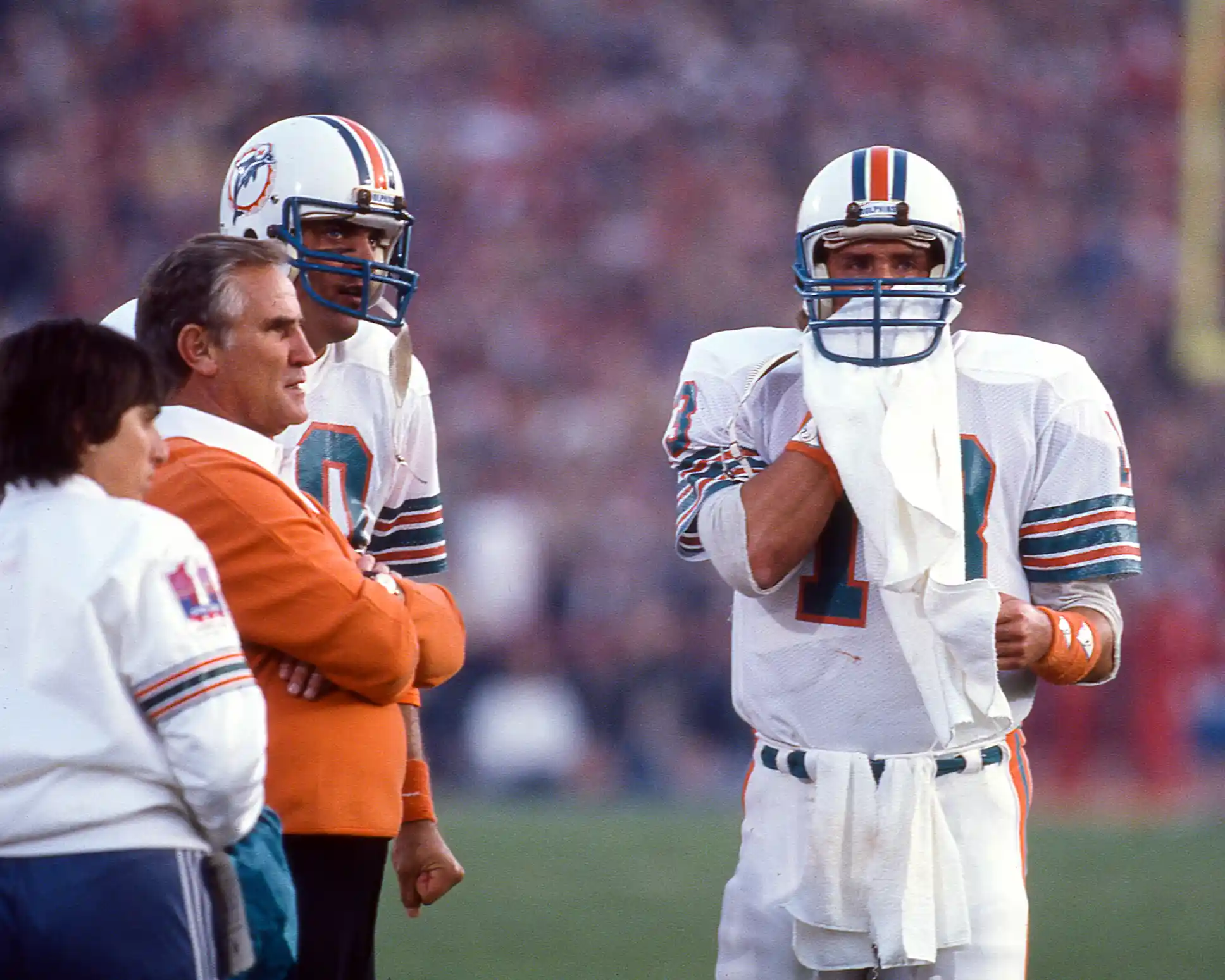
5. Don Shula: 94–57–1 (.622)
Miami Dolphins (1980–1989)
ID 69179146 @ Gerald T. Coli | Dreamstime.com
The winningest coach in NFL history didn’t slow down in the 1980s. Don Shula entered the decade as a legend — and by its end, he had reinvented himself once again.
After dominating the 1970s with a balanced, run-oriented attack, Shula adapted brilliantly to the rise of the passing game. When Dan Marino arrived in 1983, the Dolphins became a passing juggernaut. Shula built the offense around Marino’s arm, creating one of the most prolific aerial attacks the league had ever seen.
Under Shula, Miami reached the Super Bowl twice during the decade — losing to Washington in Super Bowl XVII (1982 season) and San Francisco in Super Bowl XIX (1984 season). Despite not claiming another title, Shula’s Dolphins were perennial contenders, finishing with eight winning seasons in ten years.
His ability to evolve — from the ground-heavy 1970s Dolphins to the pass-happy ’80s version — showcased Shula’s football intellect and adaptability. His legacy as a coach who thrived across eras is unmatched. Shula was inducted into the Pro Football Hall of Fame in 1997 and in 2019 was selected to the NFL 100th Anniversary All-Time Team as one of the 10 greatest head coaches in NFL History.
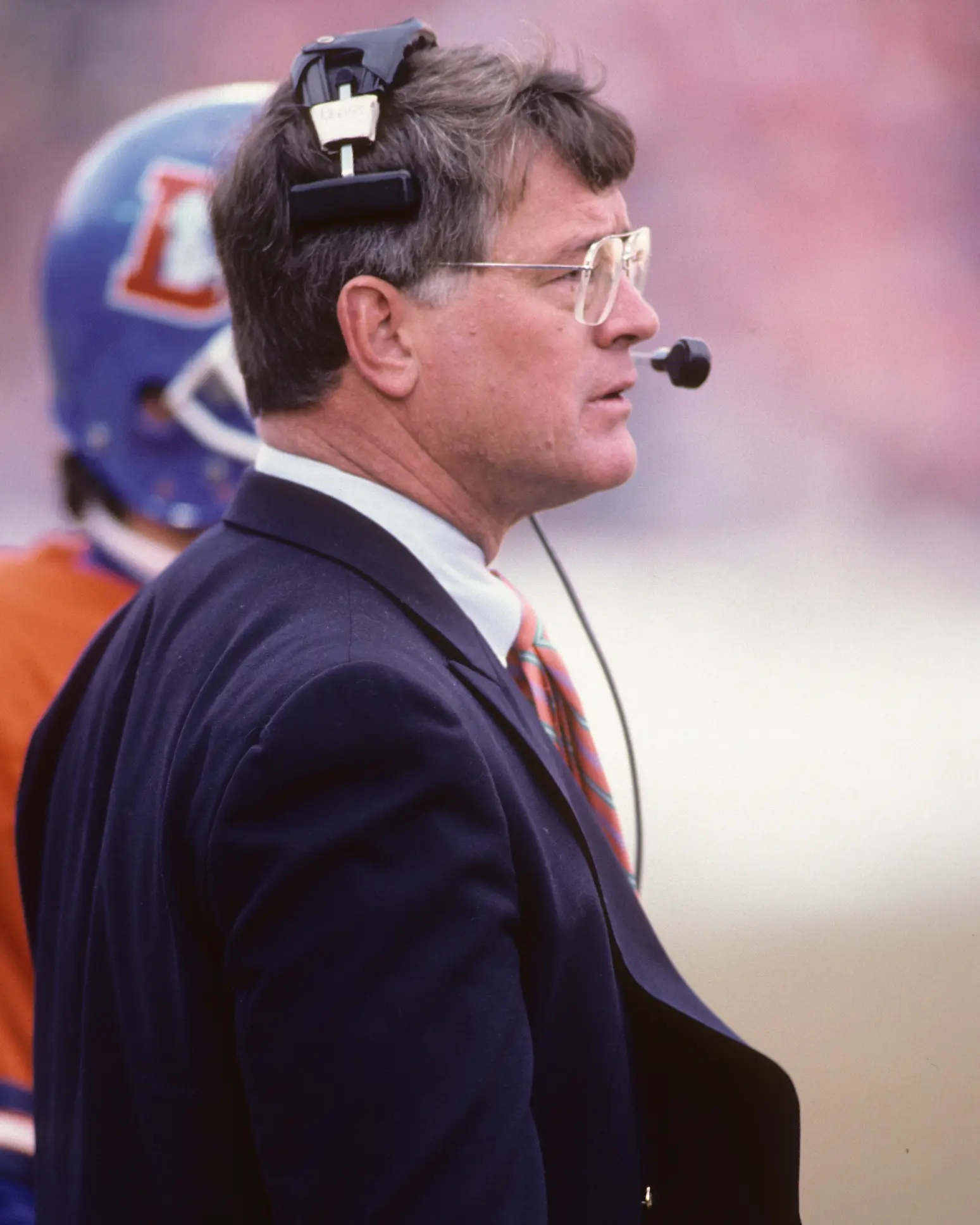
4. Dan Reeves: 85–50–1 (.629)
Denver Broncos (1981–1989)
ID 76383970 @ Gerald T. Coli | Dreamstime.com
Dan Reeves was the architect behind one of the AFC’s most dominant teams of the decade — the Denver Broncos. Known for his no-nonsense style and balanced approach, Reeves molded Denver into a championship contender almost every year.
With John Elway under center, the Broncos became synonymous with late-game drama and deep playoff runs. Reeves’ teams reached three Super Bowls in four years (1986, 1987, 1989), though they fell short each time. Despite those losses, Denver’s consistency was remarkable — six playoff appearances and five division titles under Reeves’ leadership.
Reeves’ Broncos were disciplined, tough, and creative — capable of winning with defense, special teams, or Elway’s heroics. He managed star players with a steady hand and created a winning culture in the Mile High City.
Though a Super Bowl victory eluded him in the ’80s, Reeves’ record speaks for itself. Few coaches sustained his level of excellence across an entire decade.
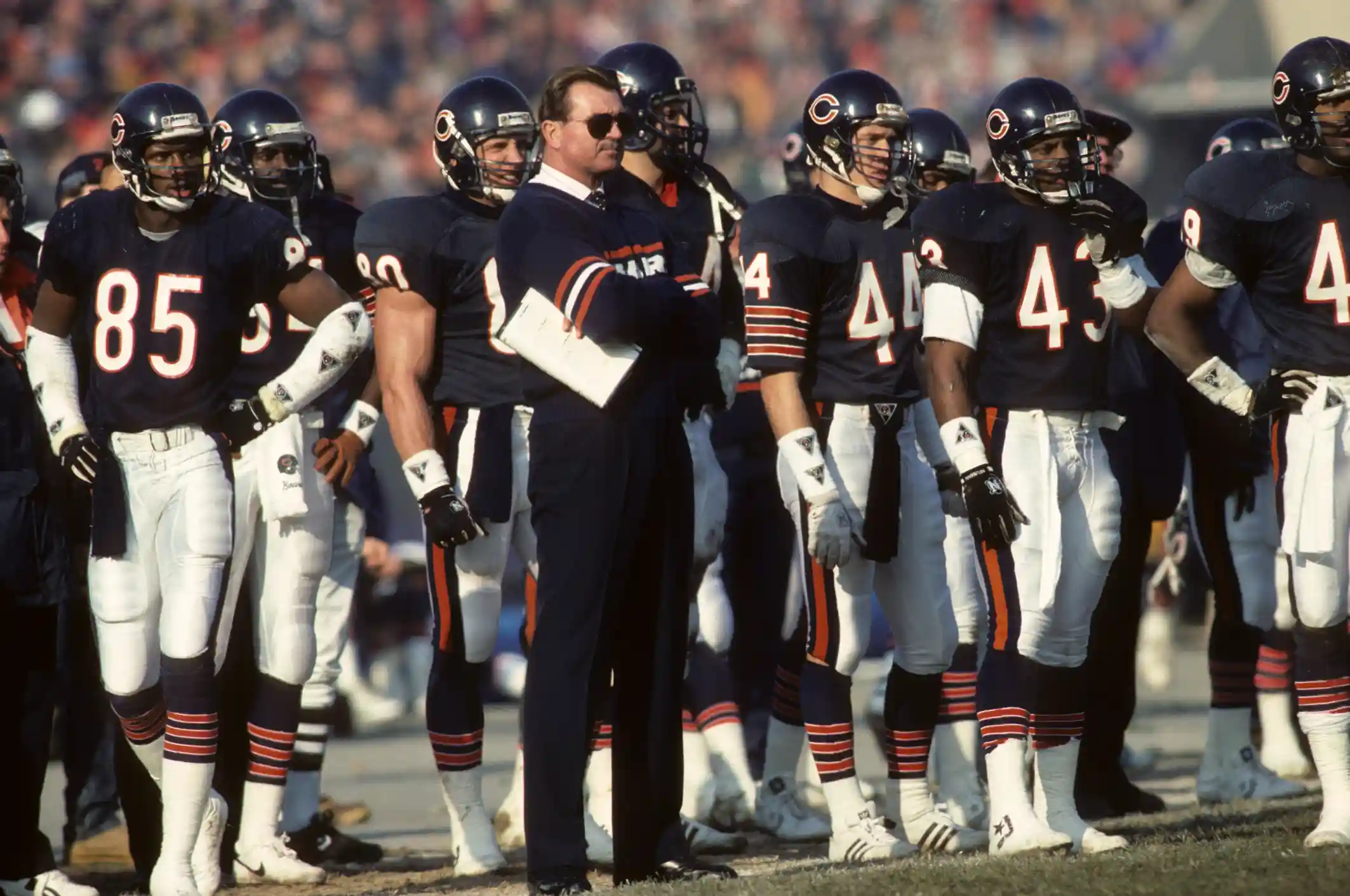
3. Mike Ditka: 79–41–0 (.658)
Chicago Bears (1982–1989)
ID 74008882 @ Gerald T. Coli | Dreamstime.com
“Da Coach.” Few figures embodied 1980s football like Mike Ditka — fiery, passionate, and unapologetically old-school. Taking over in 1982, Ditka turned the Chicago Bears into a dominant, swagger-filled powerhouse.
His Bears of the mid-1980s are legendary. With defensive coordinator Buddy Ryan designing the feared 46 Defense, and stars like Walter Payton, Mike Singletary, and Richard Dent, Chicago became the most feared team in football. The pinnacle came during the 1985 season, when the Bears finished 15–1, crushed opponents by a combined 91–10 in the playoffs, and destroyed New England 46–10 in Super Bowl XX.
That 1985 team is still considered one of the most dominant in NFL history.
Ditka’s Bears made the playoffs five straight times from 1984–1988, winning four division titles. His fiery personality and blue-collar ethos perfectly matched the city he coached. While he never won another Super Bowl, Ditka’s Bears defined an era of toughness and style that still resonates today.
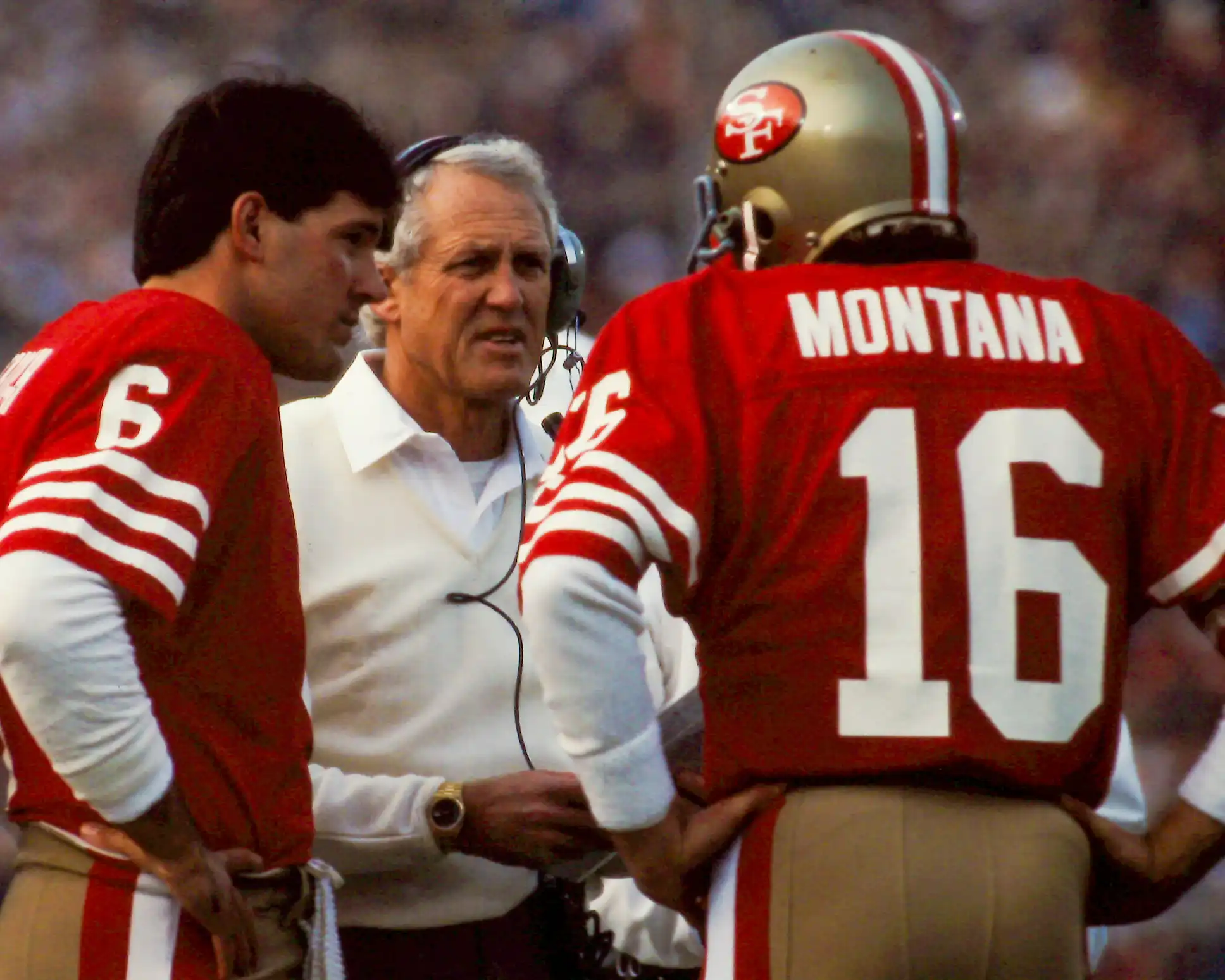
2. Bill Walsh: 90–45–1 (.665)
San Francisco 49ers (1980–1988)
ID 41227797 @ Gerald T. Coli | Dreamstime.com
Few coaches in NFL history have had a greater tactical impact than Bill Walsh. The architect of the West Coast Offense, Walsh’s innovations revolutionized offensive football and laid the foundation for modern passing schemes.
When Walsh arrived in San Francisco in 1979, the 49ers were in disarray. By 1981, they were Super Bowl champions. Over the next eight years, Walsh turned the 49ers into a dynasty, winning three Super Bowls (XVI, XIX, XXIII) and creating one of the most efficient, disciplined, and creative teams ever assembled.
With Joe Montana executing his precision passing system and stars like Jerry Rice, Dwight Clark, and Roger Craig, Walsh’s 49ers became the standard of excellence. His meticulous attention to detail, innovative play-calling, and calm demeanor made him a master strategist.
Beyond the titles, Walsh’s influence extended through his coaching tree — including George Seifert, Mike Holmgren, and later, Andy Reid. His .665 winning percentage and three Lombardis make him one of the most important figures in NFL history. Walsh was inducted into the Pro Football Hall of Fame in 1993 and in 2019 was selected to the NFL 100th Anniversary All-Time Team as one of the 10 greatest head coaches in NFL History.
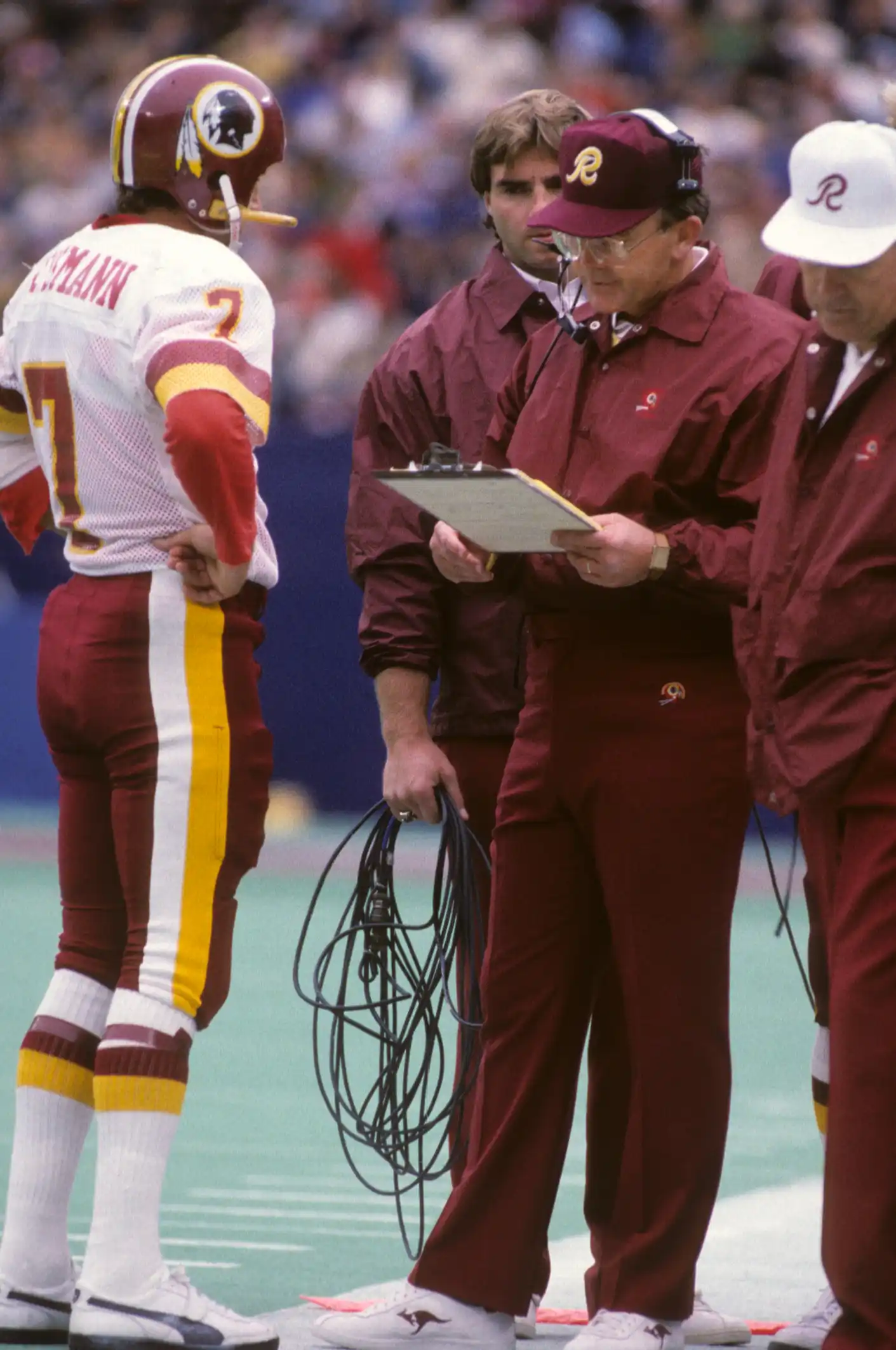
1. Joe Gibbs: 91–45–0 (.669)
Washington Redskins (1981–1989)
ID 73982039 @ Gerald T. Coli | Dreamstime.com
At the top of the 1980s coaching mountain stands Joe Gibbs — the ultimate architect of consistent excellence.
Taking over the Washington Redskins in 1981, Gibbs inherited a middling team and built a dynasty that reflected his intelligence, adaptability, and work ethic. His Redskins captured three NFC Championships and two Super Bowls during the decade (XVII in 1982, XXII in 1987), all while fielding rosters that constantly evolved.
What made Gibbs special was his ability to win with different personnel and styles. He won with three different Super Bowl quarterbacks — Joe Theismann, Doug Williams, and Mark Rypien — and built powerful running attacks behind the famed “Hogs” offensive line. His game plans were tactical masterpieces, blending power football with creative passing concepts.
The Redskins under Gibbs were disciplined, physical, and smart — everything a great NFL team should be. His .669 winning percentage was the best of the decade, edging even the great Bill Walsh.
Gibbs’ leadership, humility, and adaptability made him the defining coach of the 1980s — a true master of his craft. Gibbs was inducted into the Pro Football Hall of Fame in 1996 and in 2019 was selected to the NFL 100th Anniversary All-Time Team as one of the 10 greatest head coaches in NFL History.
Continue Exploring NFL Coach Rankings
- Best NFL Coaches: Ranked by Most Consecutive Winning Seasons
- Best NFL Coaches: Ranked by Best 10-Year Winning Percentage
- Best NFL Coaches of the 1980s: Ranked by Winning Percentage
- Best NFL Coaches of the 1990s: Ranked by Winning Percentage
- Best NFL Coaches of the 2000s (2000-2009): Ranked by Winning Percentage
- Best NFL Coaches of the 2010s: Ranked by Winning Percentage


Comments ()