Best NFL Quarterbacks of the 1970s: Ranked by Winning Percentage
A look at the Best NFL Quarterbacks of the 1970s, ranked by winning percentage, focusing on the quarterbacks who consistently delivered victories in one of the most brutal eras in NFL history. Minimum of 50 starts during the 1970s.
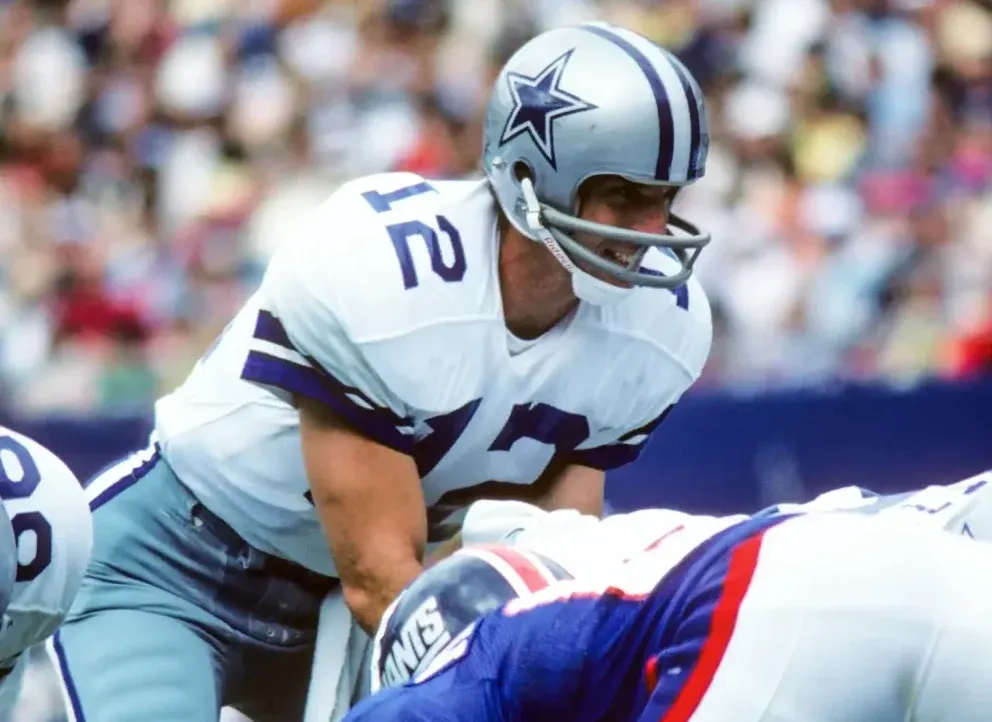
A look at the Best NFL Quarterbacks of the 1970s, ranked by winning percentage, focusing on the quarterbacks who consistently delivered victories in one of the most brutal eras in NFL history. Minimum of 50 starts during the 1970s.
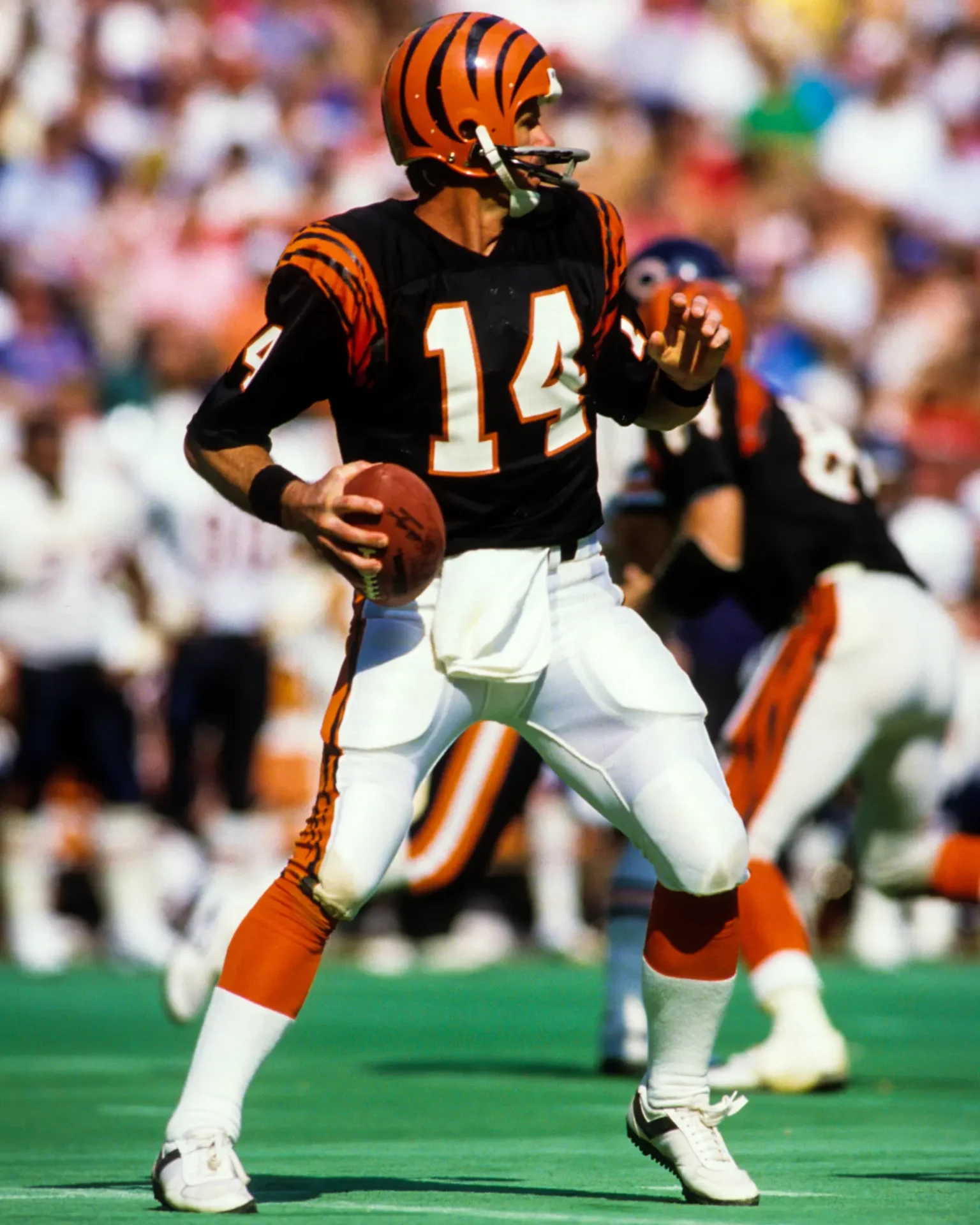
10. Ken Anderson 59–52–0 (.532)
Teams: Cincinnati Bengals (1971–1979)
ID 39072657 @ Gerald T. Coli | Dreamstime.com
Ken Anderson may sit at the bottom of this ranking, but that placement undersells just how important he was to the evolution of quarterback play in the 1970s. Anderson arrived in Cincinnati as a third-round pick out of Augustana and grew into the intellectual engine of the Bengals’ offense. At a time when efficiency was rare and interceptions were tolerated as collateral damage, Anderson played with remarkable precision.
Under head coach Paul Brown and later Bill Walsh, Anderson became the prototype for what would eventually be known as the West Coast offense. His quick release, timing routes, and willingness to distribute the ball to multiple receivers were revolutionary in an era dominated by vertical passing and power football. In 1975, he led the NFL in passer rating, and in 1976 he topped the league in completion percentage—both stunning achievements for a quarterback on a still-maturing franchise.
The Bengals were not perennial contenders during the decade, which explains Anderson’s modest winning percentage compared to others on this list. Cincinnati reached the playoffs only once in the 1970s, but Anderson’s calm leadership and technical excellence laid the foundation for the team’s Super Bowl run in the early 1980s. His statistical consistency and football IQ made him one of the most underrated quarterbacks of his era, even if the wins didn’t always follow.
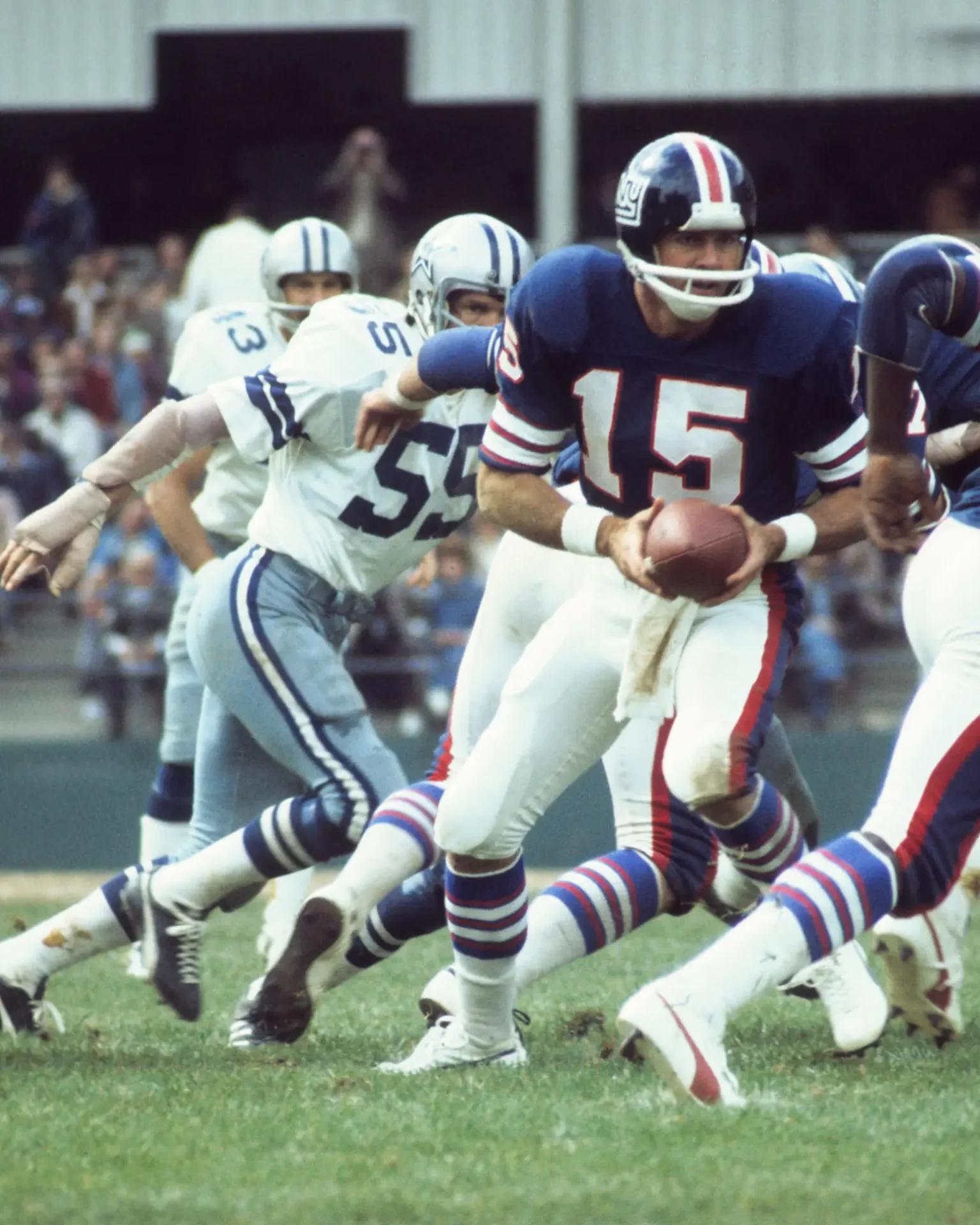
9. Craig Morton 53–46–0 (.535)
Teams: Dallas Cowboys (1970–1973), New York Giants (1974–1976), Denver Broncos (1977–1979)
ID 74116893 @ Gerald T. Coli | Dreamstime.com
Craig Morton’s career in the 1970s reads like a study in adaptability. Few quarterbacks of the era experienced as many stylistic and organizational shifts, yet Morton still managed to post a winning record across three franchises. Best known early for his time with the Cowboys, Morton helped guide Dallas to Super Bowl V, where he started ahead of Roger Staubach—a decision that still sparks debate.
Morton’s Cowboys tenure was defined by stability and structure, but his most impressive work came later in Denver. In 1977, Morton led the Broncos to a 12–2 regular season and their first Super Bowl appearance, earning NFL Comeback Player of the Year honors. That season cemented his legacy as more than just a system quarterback. He thrived in a ball-control offense, minimizing mistakes and making timely throws rather than flashy ones.
His years with the Giants were less successful, marked by organizational instability and limited talent, which dragged down his overall winning percentage. Still, Morton’s career arc shows resilience and professionalism. He wasn’t a transcendent talent, but he consistently kept his teams competitive, especially when surrounded by strong defenses and disciplined coaching.
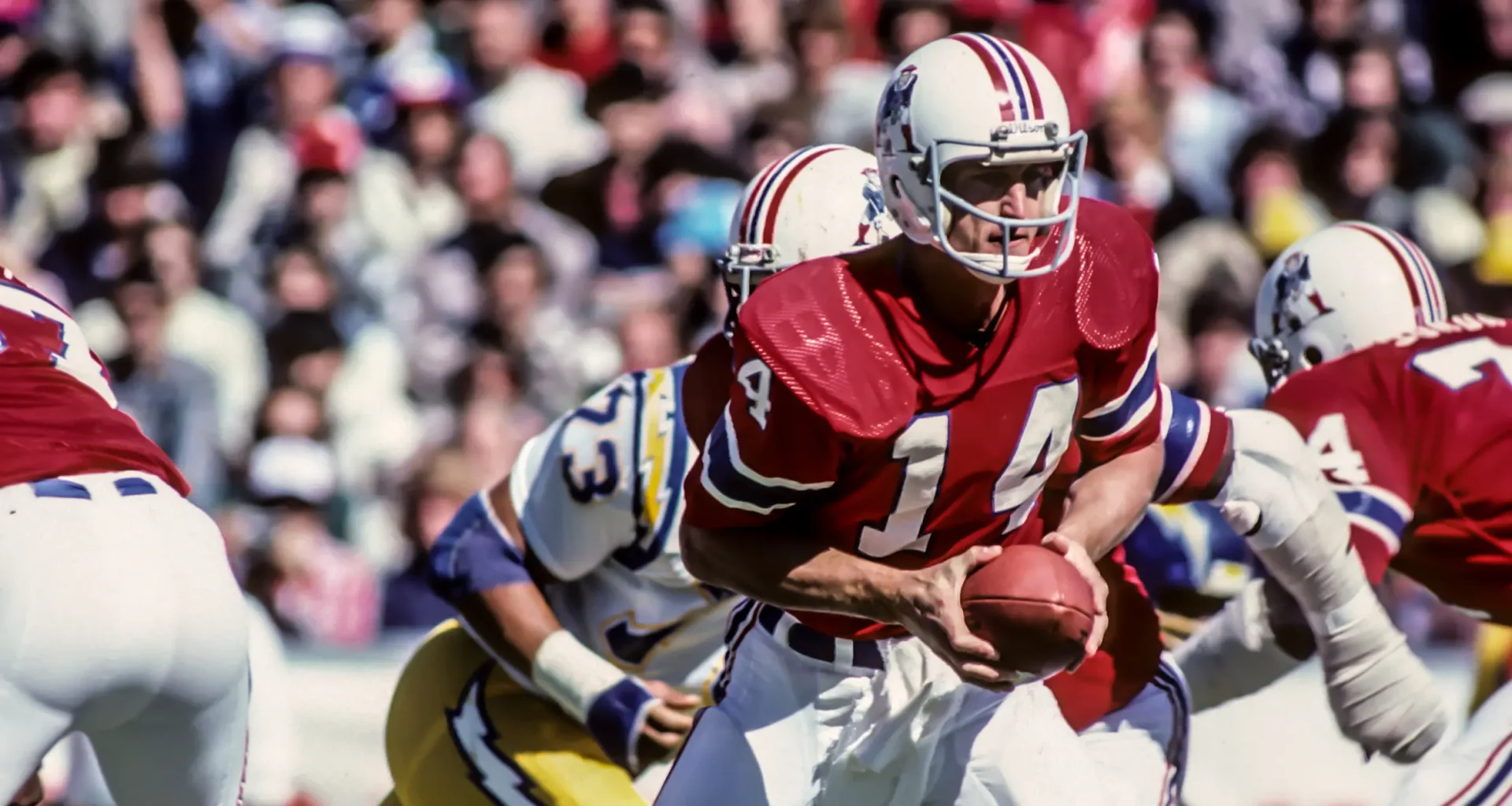
8. Steve Grogan 41–26–0 (.612)
Team: New England Patriots (1975–1979)
ID 121058204 @ Gerald T. Coli | Dreamstime.com
Steve Grogan was one of the toughest quarterbacks of the 1970s, a player who embodied grit in a franchise still searching for identity. Taking over as the Patriots’ starter in the mid-1970s, Grogan helped transform New England from an afterthought into a legitimate AFC contender.
Grogan’s style was fearless. He absorbed punishment, scrambled when necessary, and often played through injuries that would sideline most quarterbacks. In 1976, he led the Patriots to an 11–3 record and an AFC East title, earning Pro Bowl honors and establishing himself as one of the league’s rising stars. That season alone accounts for a significant portion of his impressive winning percentage.
While Grogan never led New England to a Super Bowl in the 1970s, his impact went beyond postseason success. He gave the Patriots credibility and consistency at the most important position on the field. In a decade dominated by dynasties, Grogan’s ability to win at a high rate on a developing team stands out. His .612 winning percentage reflects both his leadership and his willingness to do whatever it took to win games.
7. Bert Jones 38–24–0 (.613)
Team: Baltimore Colts (1973–1979)
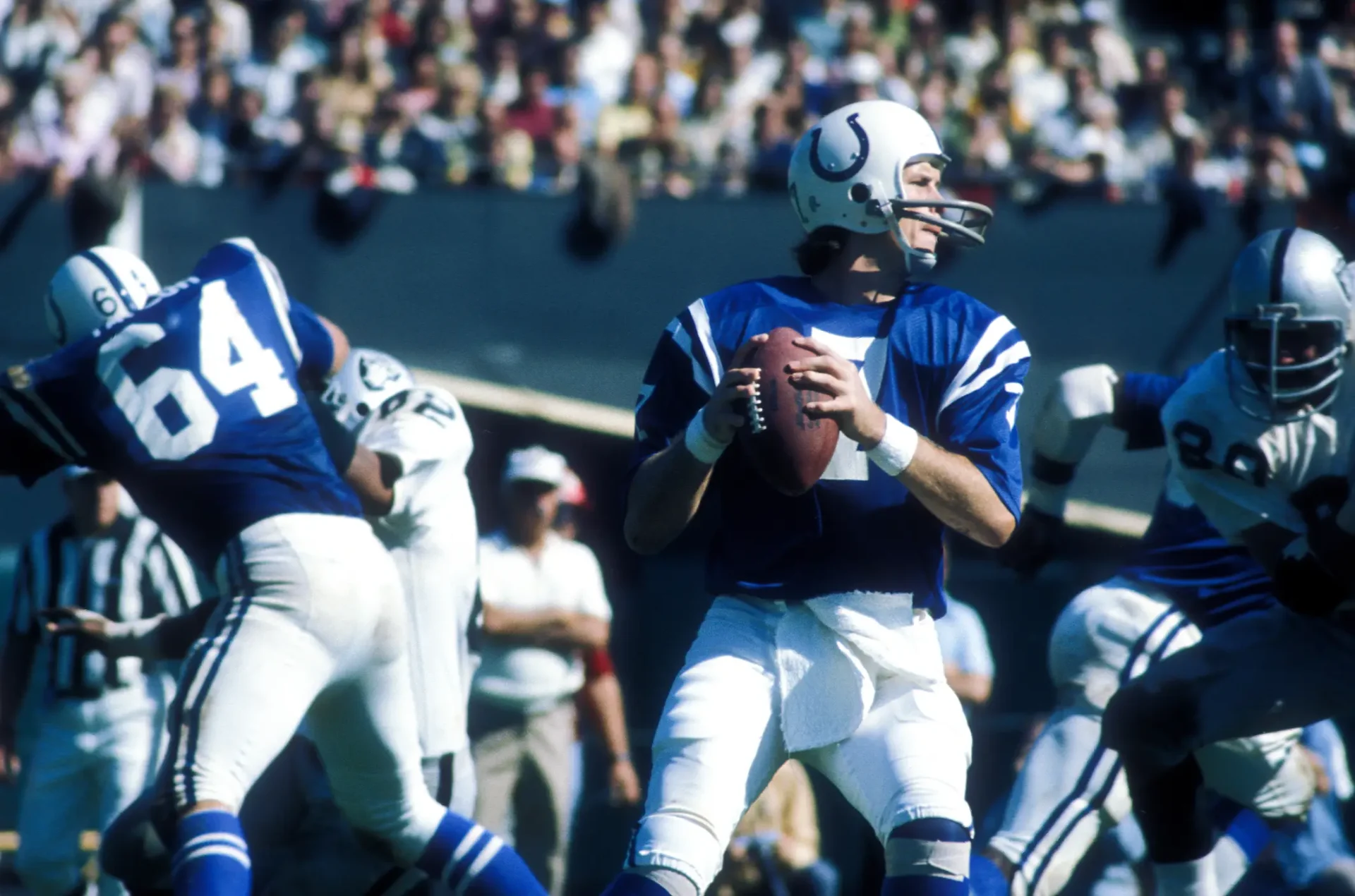
ID 74522363 @ Gerald T. Coli | Dreamstime.com
Bert Jones was one of the most naturally gifted quarterbacks of the 1970s, and at his peak, few could match his combination of arm strength, mobility, and decision-making. Drafted first overall in 1973, Jones quickly became the centerpiece of the Colts’ offense and one of the league’s brightest young stars.
His breakout came in 1976, when he won NFL Most Valuable Player after leading the Colts to an 11–3 record. Jones threw with confidence and precision, excelling in a vertical passing attack that took advantage of his strong arm. That season remains one of the finest individual quarterback performances of the decade.
Injuries, unfortunately, curtailed what could have been an even greater career. Persistent shoulder problems limited Jones’ availability and consistency in the latter part of the decade, preventing him from sustaining elite production. Still, his .613 winning percentage reflects how effective he was when healthy. For a brief but brilliant stretch, Bert Jones looked like the future of the NFL quarterback position.
6. Billy Kilmer 62–31–1 (.625)
Team: New Orleans Saints (1970); Washington Redskins (1971–1978)
Billy Kilmer’s career is a testament to perseverance and late-career success. Written off early in his career, Kilmer found his stride in Washington under head coach George Allen. Surrounded by a dominant defense and a disciplined roster, Kilmer became the steady hand that guided the Redskins to consistent success.
While not known for flashy statistics, Kilmer excelled at situational football. He avoided costly mistakes, managed games effectively, and delivered in critical moments. Washington reached the Super Bowl twice during the decade with Kilmer under center, including a victory in Super Bowl VII, where the team finished the season 17–0.
His .625 winning percentage reflects the trust his coaches placed in him and his ability to maximize the talent around him. Kilmer may not appear in highlight reels, but his role in Washington’s sustained excellence during the 1970s cannot be overstated.
5. Fran Tarkenton 77–41–2 (.650)
Team: New York Giants (1970–1971)
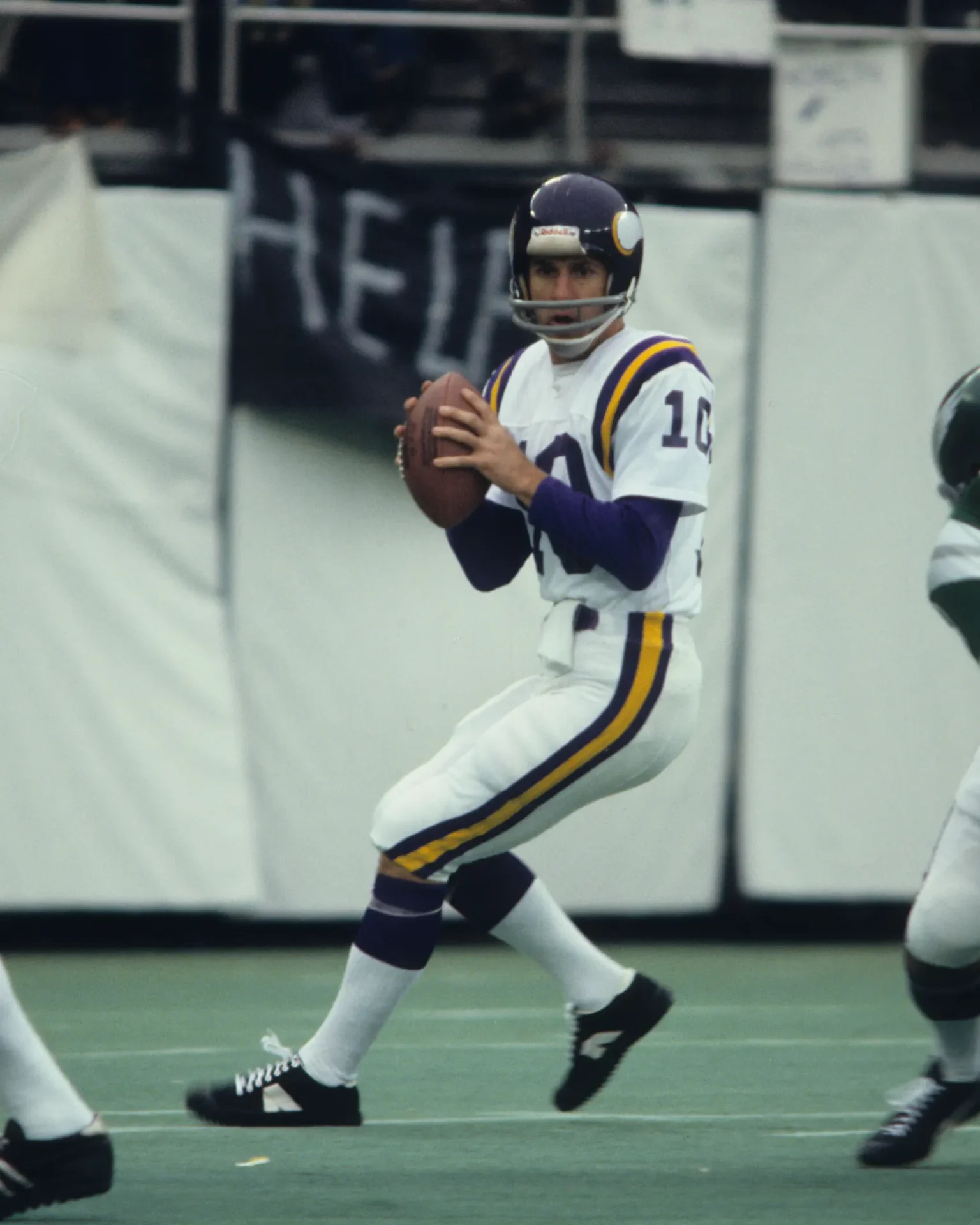
ID 73823715 @ Gerald T. Coli | Dreamstime.com
While Fran Tarkenton’s early-1970s record includes a short return stint with the Giants, his true legacy in this decade was cemented in Minnesota, where he authored one of the most remarkable second acts in NFL history. Rejoining the Vikings in 1972, Tarkenton became the driving force behind a perennial contender, leading Minnesota to three Super Bowl appearances during the decade (Super Bowls VIII, IX, and XI).
Tarkenton was a quarterback unlike any the league had seen. His scrambling ability, improvisational genius, and fearless creativity routinely turned chaos into opportunity. At a time when quarterbacks were expected to stand still and absorb punishment, Tarkenton danced away from pass rushers, extended plays, and punished defenses that lost discipline. He wasn’t just mobile—he was strategic with his movement, using it to create throwing lanes and mismatches downfield.
With the Vikings, Tarkenton combined his backyard-style playmaking with veteran command of the offense, guiding elite rosters that consistently won games and dominated the NFC. Although he never captured a Super Bowl title, his leadership, durability, and sustained winning elevated Minnesota into a 1970s powerhouse and solidified his place as one of the most innovative and influential quarterbacks in NFL history. Tarkenton was inducted into the Pro Football Hall of Fame in 1986.
4. Terry Bradshaw 83–36–0 (.698)
Team: Pittsburgh Steelers (1970–1979)
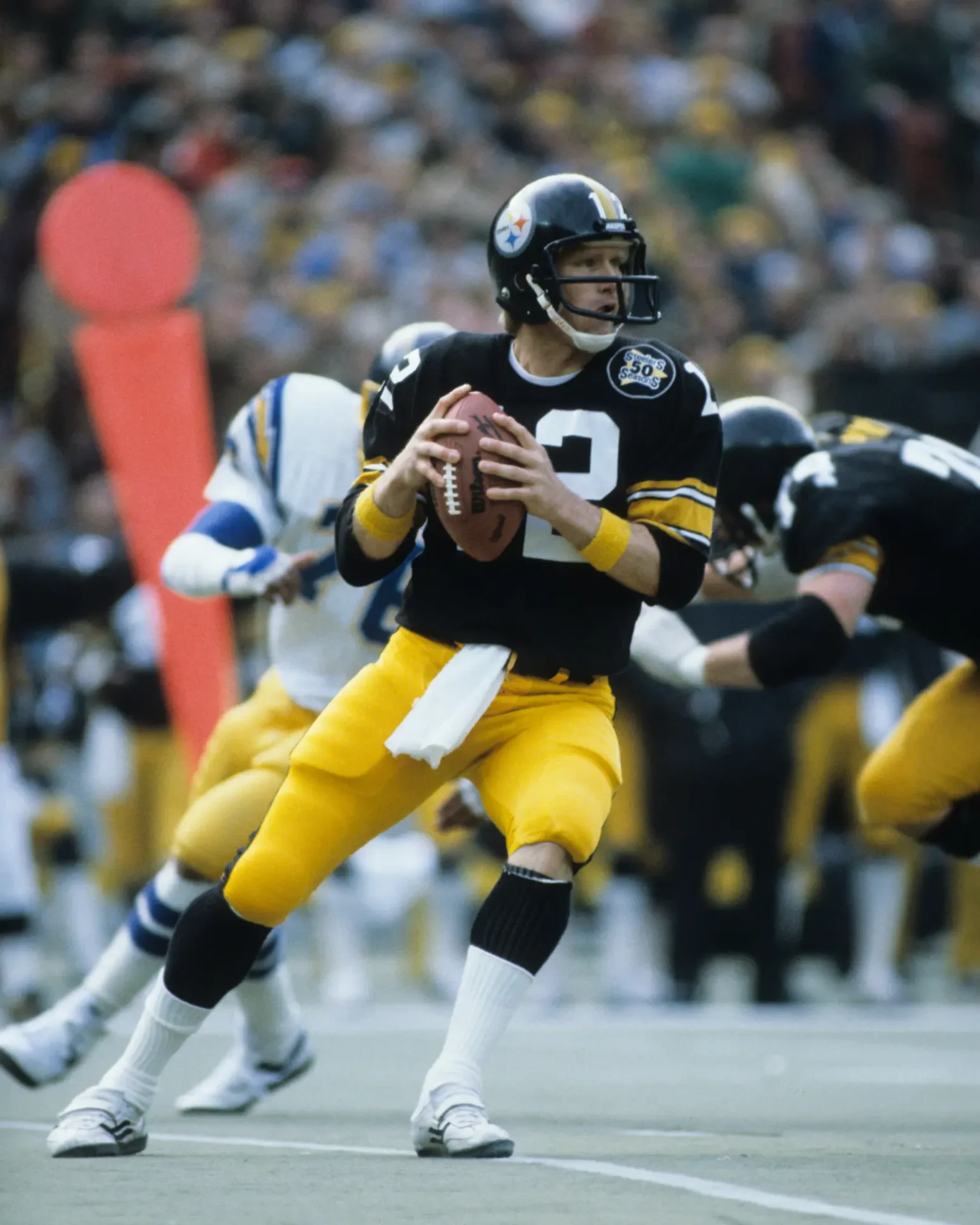
ID 74625121 @ Gerald T. Coli | Dreamstime.com
Terry Bradshaw’s 1970s résumé is inseparable from the Steelers dynasty. Early in the decade, Bradshaw struggled with consistency, but by the mid-1970s he had transformed into one of the league’s most dangerous quarterbacks.
With four Super Bowl wins and two Super Bowl MVP awards, Bradshaw delivered on the biggest stage repeatedly. He thrived in a vertical offense that complemented Pittsburgh’s dominant defense, making timely deep throws that broke opponents’ backs.
Bradshaw’s .698 winning percentage reflects not just team dominance, but his growth into a clutch performer. He wasn’t perfect, but when the moment demanded greatness, Bradshaw often delivered it. Bradshaw was inducted into the Pro Football Hall of Fame in 1989.
3. Bob Griese 81–34–1 (.703)
Team: Miami Dolphins (1970–1979)
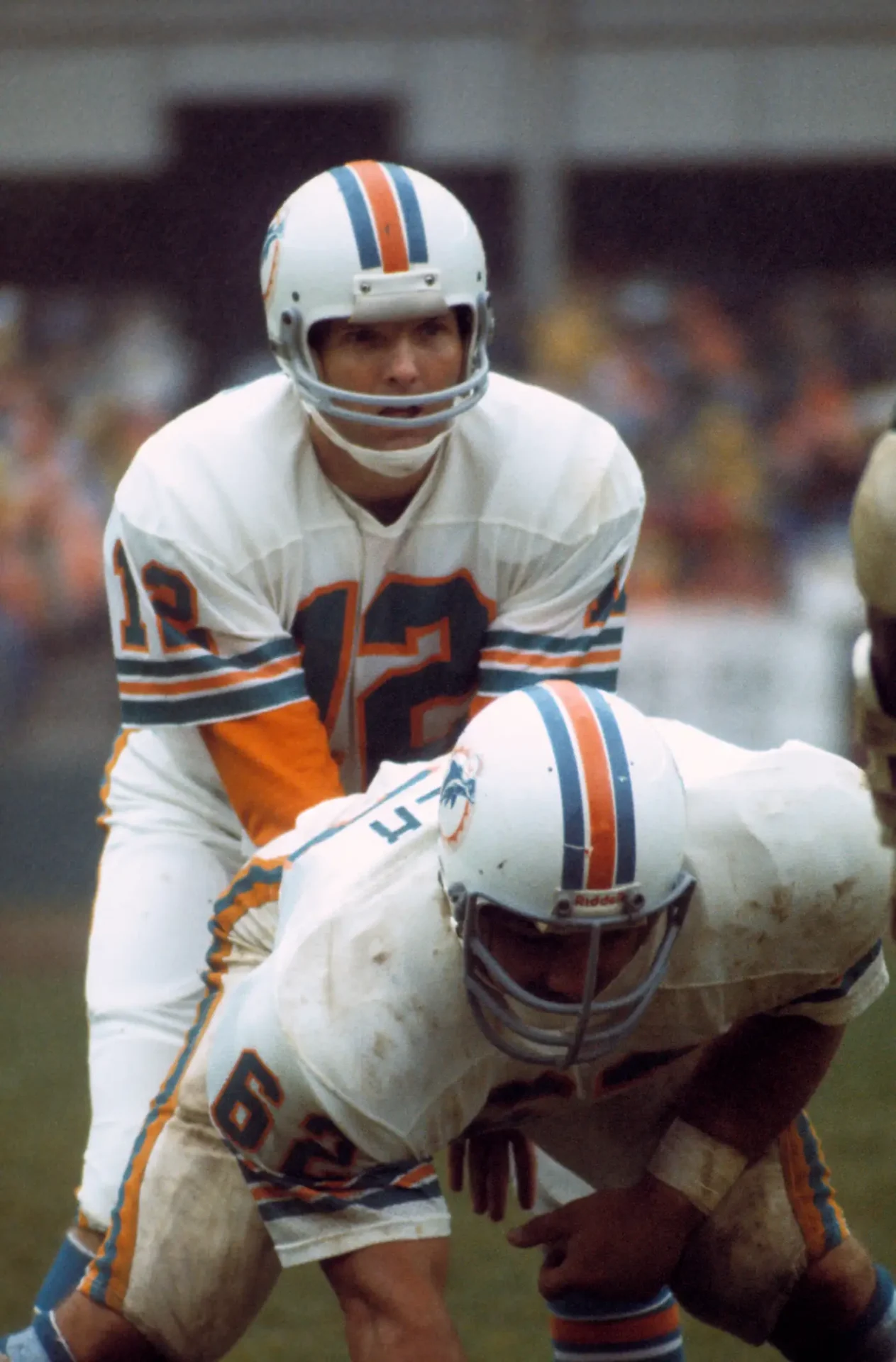
ID 73755399 @ Gerald T. Coli | Dreamstime.com
Bob Griese was the calm, efficient leader of one of the greatest teams in NFL history. As the quarterback of the Miami Dolphins, Griese orchestrated an offense built on precision and balance.
His crowning achievement came in 1972, when he helped lead the Dolphins to the NFL’s only perfect season. Griese’s ability to execute the game plan, avoid turnovers, and capitalize on opportunities made Miami nearly unbeatable.
With two Super Bowl titles and a .703 winning percentage, Griese exemplified how disciplined quarterback play could anchor a dynasty. He didn’t need gaudy numbers—his teams simply won. Griese was inducted into the Pro Football Hall of Fame in 1990.
2. Ken Stabler 69–26–0 (.726)
Team: Oakland Raiders (1970–1979)
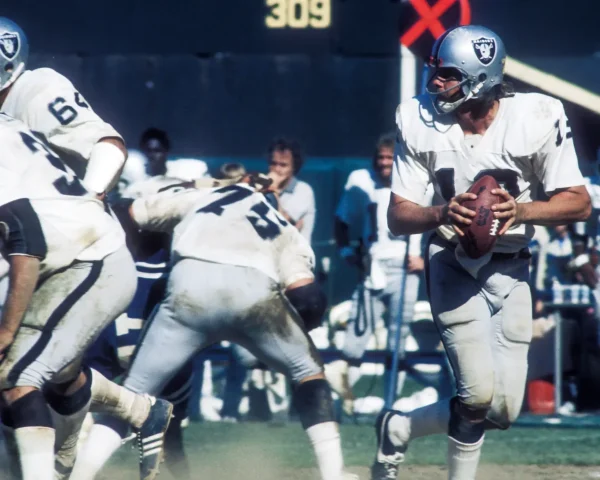
ID 42033487 @ Gerald T. Coli | Dreamstime.com
Ken Stabler was the embodiment of cool under pressure. Known as “The Snake,” he thrived in chaotic situations, leading the Raiders with swagger and confidence.
Stabler’s left-handed delivery and clutch performances defined Oakland’s identity. He won NFL MVP in 1974 and led the Raiders to a Super Bowl victory in the 1976 season. Time and again, Stabler delivered late-game heroics that swung outcomes.
His .726 winning percentage reflects both individual brilliance and a fearless approach to the game. Few quarterbacks of the era were more trusted when the game was on the line. Stabler was inducted into the Pro Football Hall of Fame in 2016.
1. Roger Staubach 84–29–0 (.743)
Team: Dallas Cowboys (1970–1979)
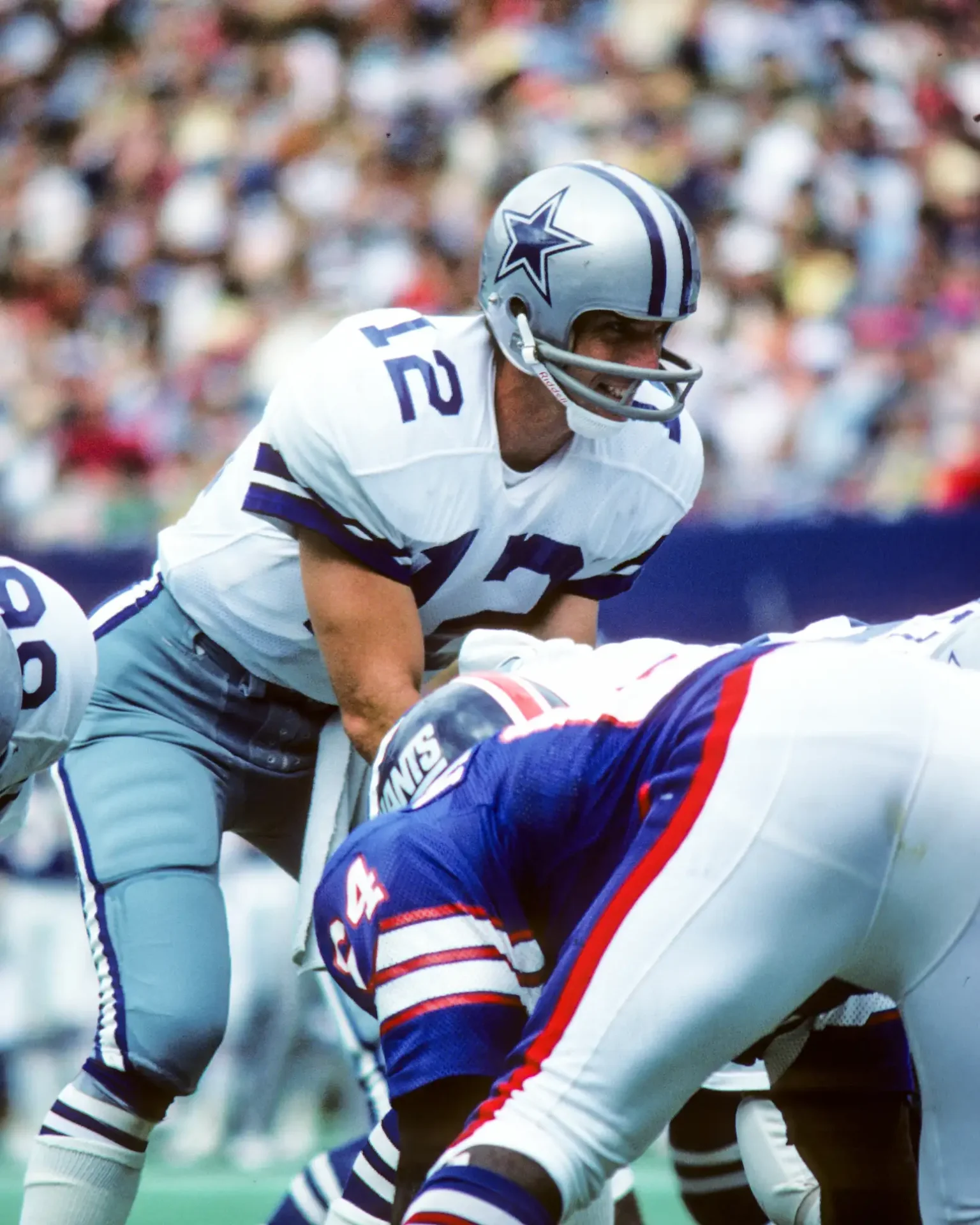
ID 42033105 @ Gerald T. Coli | Dreamstime.com
Roger Staubach stands atop the 1970s winning-percentage mountain, and it’s hard to argue against his placement. Nicknamed “Captain Comeback,” Staubach was the ultimate winner.
Leading the Cowboys to four Super Bowl appearances and two championships, Staubach combined athleticism, intelligence, and poise. His ability to orchestrate late-game comebacks became legendary, and his leadership set the standard for future quarterbacks.
With the highest winning percentage of the decade, Staubach wasn’t just successful—he was consistently dominant. In a time when the game demanded both physical toughness and high precision, Roger Staubach set the benchmark for excellence.
Staubach was inducted into the Pro Football Hall of Fame in 1985 and in 2019 was selected to the NFL 100th Anniversary All-Time Team as one of the 10 greatest quarterbacks in NFL history.
Continue Exploring NFL Quarterback Rankings
- Best NFL Quarterbacks of the 1970s: Ranked by Winning Percentage
- Best NFL Quarterbacks of the 1980s: Ranked by Winning Percentage
- Best NFL Quarterbacks of the 1990s: Ranked by Winning Percentage
- Best NFL Quarterbacks of the 2000s (2000-2009): Ranked by Winning Percentage
- Best NFL Quarterbacks of the 2010s: Ranked by Winning Percentage
- 10 Best NFL Quarterbacks: Ranked by Career Winning Percentage


Comments ()